Lela Stratton


Philips Avent Natural Glass Bottle


Joovy Boob Glass Bottles

Dr. Brown’s Wide Neck Bottles
Show Content
Many items associated with babies are usually made of plastic, ranging from toys, cots, playing canopies and a lot more. Feeding bottles are not an exception. The major question, however, arises, is a plastic material entirely safe for the baby?
When taking care of a newborn, safety ought to be prioritized. The environment of the baby has to in the best playing and growing conditions, failure to which accidents or worse off, major health issues may arise.
Glass baby bottles are products that have been invented with the major reason for caring for the wellness of the baby. They are not only safe but also easy to clean. As a feeding mom, you may have already come across glass baby bottles.
One thing I love about these products is their chemical-free nature. BPA is a component that is found mostly in polycarbonate plastics. A majority of health experts and professionals advise against the use of products with BPA material.
Buying glass baby bottles comes with an array of advantages. They are very much durable. You will be assured indeed, that the bottle is completely a quality product for your baby.
Without mincing words, let’s have a look at some of the best glass baby bottles in markets today.
Best Glass Baby Bottles List
1
Philips Avent Natural Glass Bottle
The Philips Avent Natural Glass Bottle has been given the trophy detailing the best glass bottle for breastfed babies. Many mothers who have babies actually breastfeed, right? The bottle has been made of high-grade borosilicate glass. Quality has been adhered to.
The whole package consists of 3 8-ounce glass bottles. You can heat all the bottles with minimalistic fears that they will break, as they are heat resistant. These products are indeed the perfect choice for your baby.
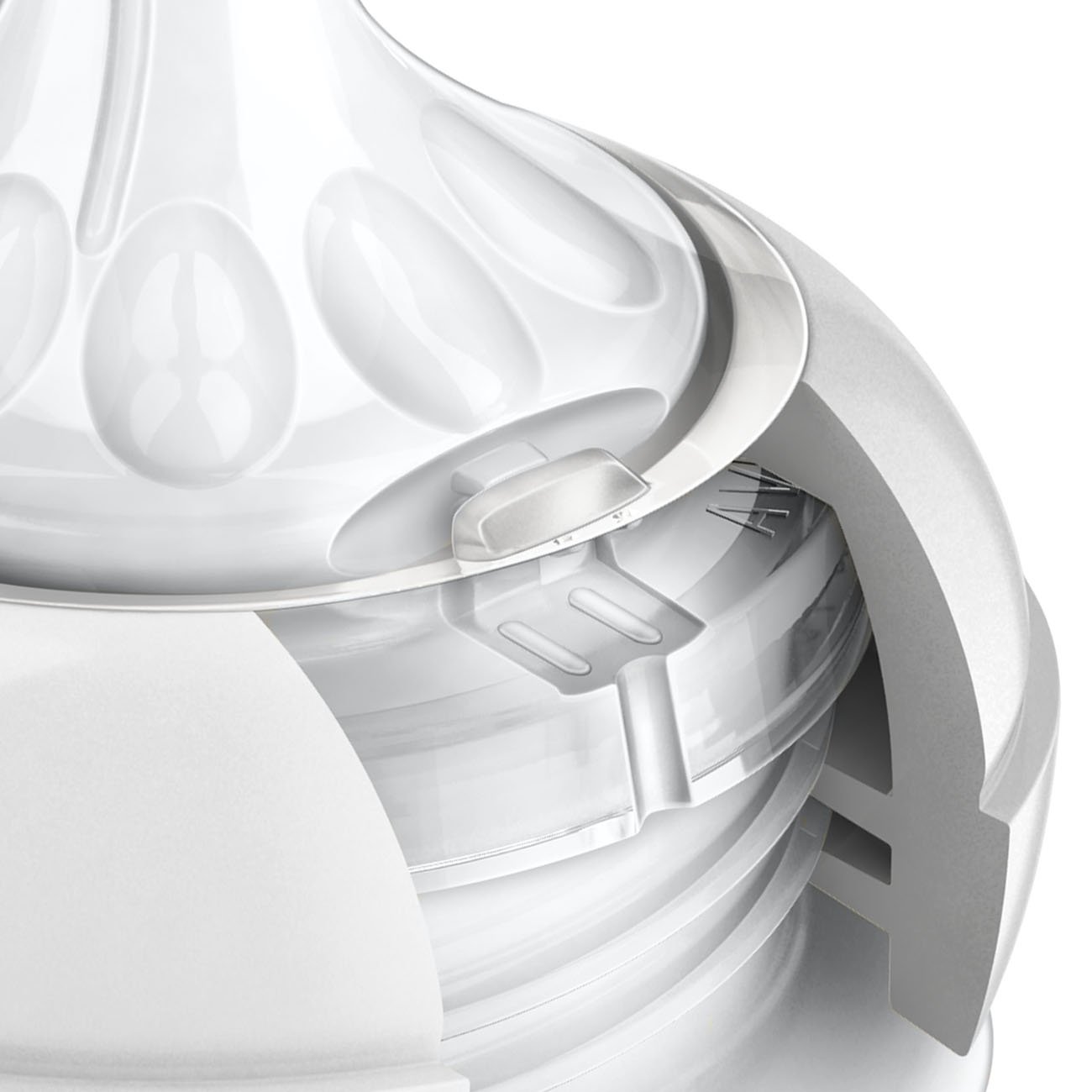
The topmost part of the bottle is basically where the baby feeds from directly. The modeling, in silicone component, has been done to resemble big breast-like silicone nipples.
Additionally, the baby will find it easy and enjoyable, thanks to the latch likability they from during breastfeeding.
There will be no confusion ensuing, as the bottle and nipple-part barely move back and forth.
Pros
Cons
2
Joovy Boob Glass Bottles
Joovy Boob Glass Bottles have been ranked as the best glass baby bottles for colic and gas. Some of you may have experienced the gruesome outcomes of colic and gas.
This model is here to help you forget this, and assure you that at no instance whatsoever will they be a problem for your baby.
Anti-colic features have been added to help reduce gas intake by the baby. The entire package constitutes three bottles. Each of the models weighs 8 ounces. The availability of the one-piece Clear Flow vent helps in reducing air intake by the baby.
The vent is easy to clean. Furthermore, the bottle had been designed to prevent leaks in the course of feeding. A silicone sleeve has been wrapped on the outer part of the glass bottle, to give you and your baby comfort and security while using it to feed.
Pros
Cons
3
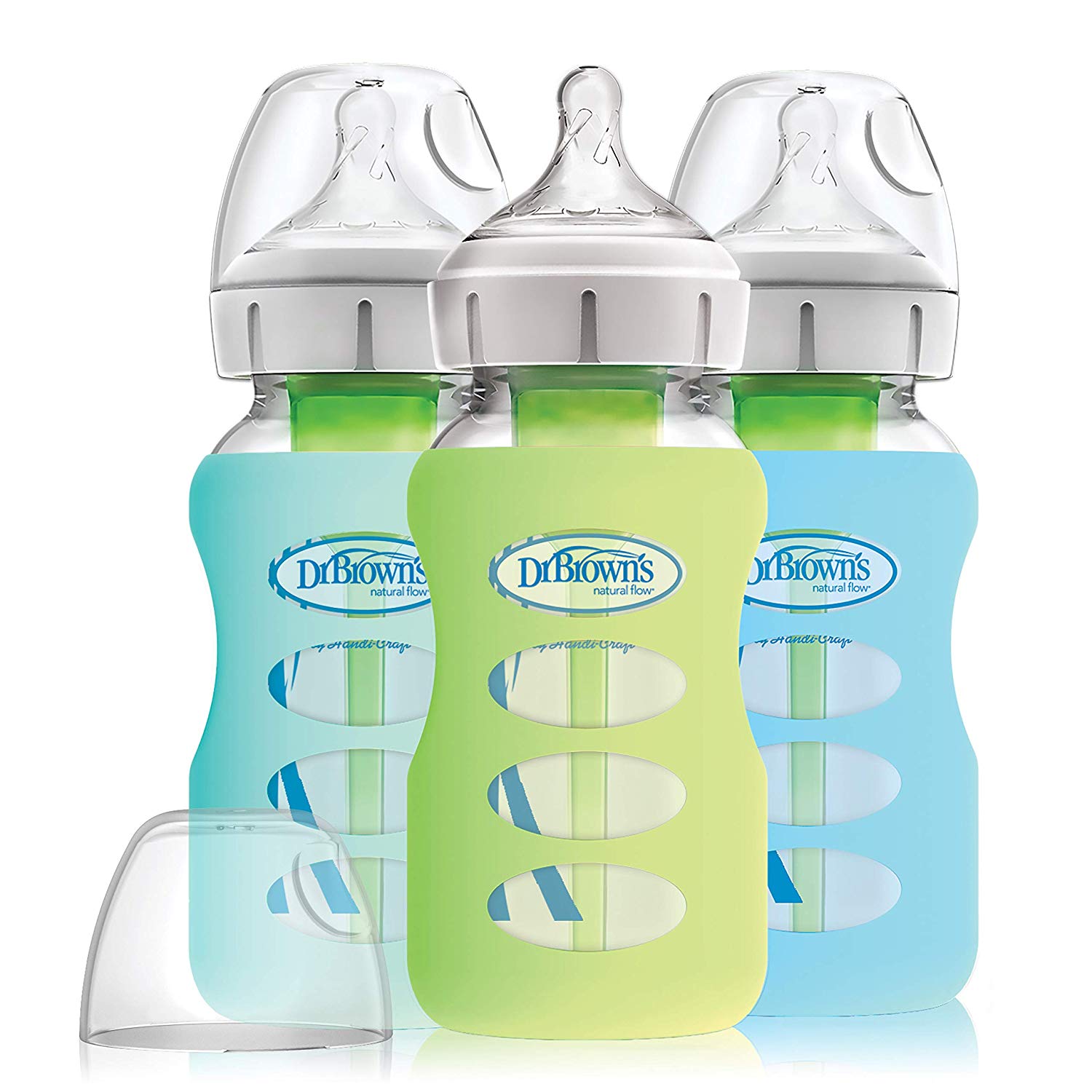
Dr. Brown’s Wide Neck Bottles
Sometimes, as a new bottle-feeding mom, you wish that your baby barely intakes gas at any point in the course of feeding. Well, Dr. Brown’s Wide Neck Bottles are here to give you assured surety concerning the same.
These bottles are the best when it comes to convertible vent glass bottles. They have an added advantage of keeping your baby free from bouts of colic infections. The vent system is removable, making it so much easier to clean.
The glass that has been used is sturdy in structure. It is also lightweight, making it durable, and easy to handle. The silicone sleeve has been placed on the outer parts of the glass bottle to add to safety and security aspects.
Pros
Cons
4
Evenflo Feeding Classic Glass Twist Bottles
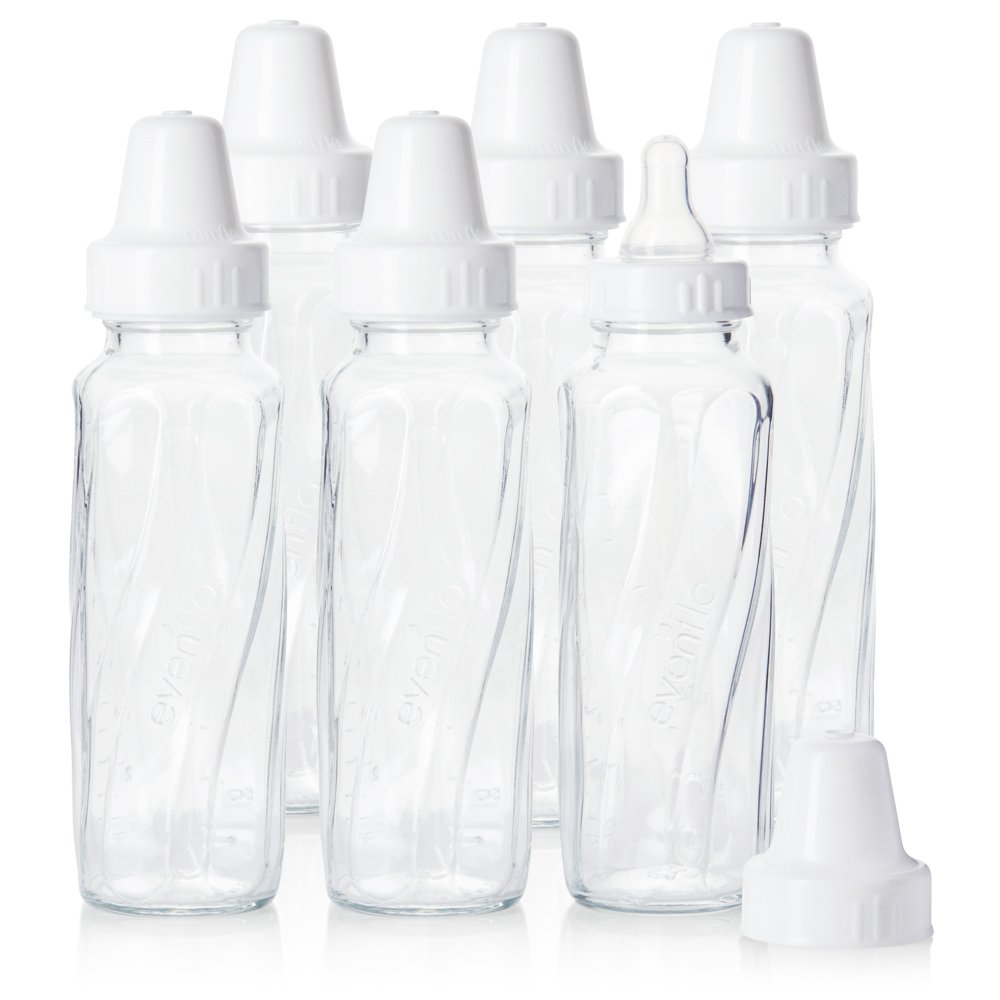
In case you are looking for an affordable glass bottle that still maintains a reputation in terms of quality, the Evenflo Feeding Classic Glass Twist Bottle is the perfect recommendation for you.
You will find six 8-ounce bottles in the package. Other accessories that have been included are nipples and lids. The bottle is made of tempered glass. This lasts for a long time. The twist design also gives it an elegant look.
The glass is thick and sturdy. I am made to believe that the bottle was designed for long-term use. As a feeding mom, you are assured that the glass bottle will enhance the feeding process until your baby comes of age. You will scarcely need a replacement.
Pros
Cons
5
Lifefactory BPA-Free Glass Bottles
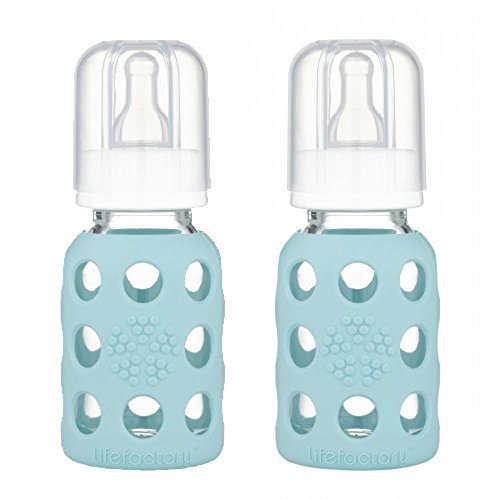
You will know that these are the best feeding options for your baby just by giving them a first-time glance.
designs are not only auspicious, but the bottles have also been built to last and keep your baby safe every time he or she indulges in the feeding process.
There are two 4-ounce bottles, each with silicone sleeves to give them a better grip. In addition, a teether has been added to the packaging accessories. The fact that the glass bottle does not contain BPA proves that it is free from latex, phthalates and also PVC.
Medical-grade silicone has been used as a protective wrap. These bottles will adequately cater for babies in all stages of growth and feeding. They are perfect for newborns with their Stage 1 nipples.
Growing babies can be provided with faster flow nipples from Lifefactory, as the models are totally compatible.
Pros
Cons
Things to Consider Before Purchasing the Best Glass Baby Bottles
Glass baby bottles, in comparison to plastic bottles, have a lot to offer. In as much as plastic bottles are cheaper and lighter, it is a downside on the latter that they are harder to clean.
Before buying any of these products, you should first engage in a few market researching processes.
This will act as an eye-opener. You will barely make any mistakes, as you will not only purchase a safe product, but also one that will last for a long time.
Recently, I was just visiting a friend of mine, who happens to be a breastfeeding mother.
In the course of breastfeeding, she would occasionally complain about how difficult it was to clean the fat film of milk after breastfeeding. She vowed to go for a glass alternative sooner after the process.
I would say that it is not just my friend here who experiences such difficulties when handling milk for the baby. Five out of every ten breastfeeding mothers experience the same problems.
The major advantage of glass bottles is that they are safe for the baby. Contact with harmful plastic sometimes results in contamination. The glass bottle is totally safe, especially when the milk is heated.
In your line of market research, there are a few things you can consider counterchecking. Know your products first, and their specifications.
The familiarization process basically requires you to know all the specifications that are good for your feeding process and those that are not.
Cleaning, as I have mentioned, is also important. You need to know how to sanitize the glass bottle, without causing any breakages in the process.
Why You Should Always Strive to Pick Glass Baby Bottles
It is a known fact that plastic bottles are cheap. They are also light and barely break. However, in as much as these bottles prove to be cheap and light, the glass bottles seemingly outweigh them when it comes to cleanliness, safety, quality, and durability.
You may be intending to save some money by purchasing a plastic bottle. You should know, that there are glass models that are cheaper too. They not only cost less but also last for long.
It is important that you consider the baby’s health before anything else. How, then, do you give your baby's health priority? It is quite simple, just pick the right glass bottle. Check if the components of the material used are BPA-free.
The main reason why we advise against the use of plastic bottles is because of the composition of the materials used. Glass bottles are the better choice because they have no chemicals.
Other glass bottles have been made from silica. This is also safe for the baby’s milk, as there are no instances where the components will disintegrate and come into contact with the baby’s food.
Breastfeeding milk usually contains fat. This fat tends to stick on the sides of plastic bottles, during and after feeding. With glass bottles, milk doesn’t stick to the sides. The bottle becomes easier to clean.
When dealing with heated milk, glass bottles are recommendable. The major downside of plastic bottles here is that they produce more chemicals when heated.
These are consumed by the child. As you know, plastic poses a severe threat to a baby when consumed.
Glass bottles don’t release any toxins when heated. This keeps the baby’s milk safe and good for consumption.
Scratching of baby bottles is a common occurrence. They may fall off, or scratch oftentimes due to frequent use. Glass baby bottles doesn’t scratch easily. Scratches are one of the major hideouts for bacteria.
The fact that glass bottles barely scratch aids in keeping bacterial components away from close contact with the baby in the course of feeding. Additionally, when the glass bottles scratch, you will find that they are so easy to clean.
You may have experienced the smell of plastic immediately after purchasing a plastic product. The smell is usually irritating, that is, to adults.
This poses a question, then, if a grown-up can strongly sense the smell, what of a newborn? What are the health risks associated with this?
The smell of plastic comes together with a taste that you wouldn’t love your child to ingest at any point during his or her feeding timelines. Additionally, you are required to sanitize the plastic product for a long time before the smell or taste vanishes.
A glass product saves you all this hassle. You will only be required to sanitize the glass bottle at least once or twice after purchase. Other needs for sanitization arise only in circumstances where the babies have lower immune system abilities.
Safety Recommendations
Glass bottles are sometimes a bit weighty. When handling them for long hours, always remember to place them regularly on flat surfaces to prevent the occurrence of any kinds of accidents.
Glass is a fragile item. It easily breaks. When giving the baby the bottle for feeding, keep in mind that the baby has to be in a soft or comfortable environment that minimizes the risk of breakage the moment the bottle is dropped to the ground.
The good thing about glass bottles is that they are quite easy to replace. Replacement, however, is done only when the bottles have cracked or have been shattered.
You should avoid putting the glass bottles in the kitchen sinks when they are dirty and need washing. It is advisable that you keep them on the counter that is located close to the sink. This minimizes contact with other items and reduces the chances of breakage.
In case the model has not been accessorized with silicone sleeves, you should consider purchasing them separately. This will help in wrapping the bottles and protecting them from breaking. The silicone sleeve is usually placed on the outer part of the glass bottle.
It does not come into contact with milk.
Care and Maintenance
You may be asking yourself, how do I keep the glass bottles clean and safe? How do I make them good for keeping milk the next time my baby needs to feed?
Before engaging in any of the processes, first confirm with the manufacturers or sanitization instructions, to determine whether the process you intend to use is recommendable. This minimizes the risk of breakage.
The first option here is to boil. A good number of glass bottles can be boiled after use. This not only keeps them safe but also saves you the money you would have intended to use to purchase a bottle sterilizer for the same purpose.
After boiling the bottles, you can air dry them. Glass bottles generally air-dry faster as compared to plastic bottles
Sterilization
This is a very significant process when it comes to cleaning glass bottles and readying them for use.
However, you shouldn’t necessarily keep it at the top of your bucket list, unless your baby is sick or ill, the baby is quite young or the immune system is generally lower.
Another instance where it is advisable that you sterilize the bottles is when you have just acquired the model and intend to use it for the first time.
There are various ways that you can sterilize the glass bottles. You can easily sanitize the bottles by placing them on a hot cycle in the dishwasher. Most of the accessories can also be placed at the top of the dishwasher for sterilization.
Alternatively, you can wash them normally and later on place them in a pan with boiling water for ten minutes. After sterilization, air dry and seal them carefully, to prevent any bacteria from getting into the bottles.
There at instances that call for the need for thorough sterilization. This can be conducted easily by placing the glass bottles in electric and microwave steamers.
Warming Glass Baby Bottles
In most instances, it is not advisable that you warm the glass bottles by putting them in the microwave. You can always warm glass bottles in the same way as plastic bottles, but with a few exceptions to keep in mind.
When using special bottles warmers, read the instructions provided, to see if the process is compatible with the type of bottle you intend to warm.
One way of safe warming the bottles is with the use of running hot water. You can also choose to place the bottle is a warm water bath for a few minutes. Always choose the right process. In case you are not sure, contact the manufacturer for more information.
Similarly, when using a dishwasher, check the cleaning instructions. It is advisable that you use a special bottle steamer for the purpose of sterilization too.
It is recommendable that you don’t put a bottle filled with milk in a microwave for the purpose of heating. This is because, when feeding the baby, hot spots may scold the baby. These hot spots are formed through microwave heating.
Products of glass are generally delicate. They easily break when exposed to extreme heat. Before placing the glass bottle in hot water for sterilization, consider determining the temperatures that are favorable for such processes.
Freezing
Some brands can be put in a freezer while others cannot. Milk expands when it freezes. This may break the glass when placed in extremely low temperatures.
It is advisable that you use standard milk storage bags for the purpose of keeping your milk safe for later use.
Conclusion
There you go! The best glass baby bottles for your baby. All that is left is for you to storm the market straight away and grab a model that will take care of your baby's feeding needs for as long as is required of it.
Always go for the best models. Sometimes you may be working under fixed budgets. There is no need to worry. Glass baby bottles come in wide varieties, you will definitely find an affordable model that meets the safety and health standards of babies today.
There are different models to go for. For me, however, the Lifefactory BPA-free Glass bottles stand out. I wouldn’t trade them for anything. They have been made of high-grade glass that doesn’t easily.
Additionally, you get silicone sleeves to protect the glass bottle from shattering the instance it drops on the floor. You get two 4-ounce bottles. They are not only lightweight but also easy to use. I wouldn’t forget the teether that comes as part of the accessories.
The bottles are totally BPA-free. You wouldn’t worry about health risks. No phthalates, no latex, no PVC.
Thermal shock commonly affects glass bottles. This is not the case with the Lifefactory glass bottle. It withstands instant transition of the bottles from hot to cold temperatures. Check out our top pick, "Philips Avent Natural Glass Bottle" (CHECK BEST PRICE HERE)