Lela Stratton

Roland Rd-2000


Yamaha Ydp-184

Yamaha Cp88
Show Content
We all know the joy of enjoying a cup of tea or wine as you unwind with the great sound of quality piano music. So, are you looking to buy a piano? Then you are in the right place.
There a lot of digital pianos to choose from, so what should you look out for? You should bear in mind the length, size of the keyboard, the number of different keys the piano offers, the number of sounds the piano can produce, and such.
If you are a music lover, then you know that to enjoy great music, you will need a piano that can produce different sounds. Also, a piano that can recreate the sound by a grand piano would do you a lot of justice. So, how do you find the best digital piano?
We understand how difficult it is to find the best digital piano in a market filled with similar items. The worst bit is that a single mistake could mean you take home the wrong item, which could end in a terrible way.
However, the topic at hand can be somewhat subjective because we all have preferences or grew up playing a particular brand of an acoustic piano, which we believe to be the best. However, because we understand your issues, we undertook extensive research and testing to find answers.
We have curated a selection of the very best digital pianos for all levels of playing. We are positive you will find what you are looking for!
Best Digital Piano List
1
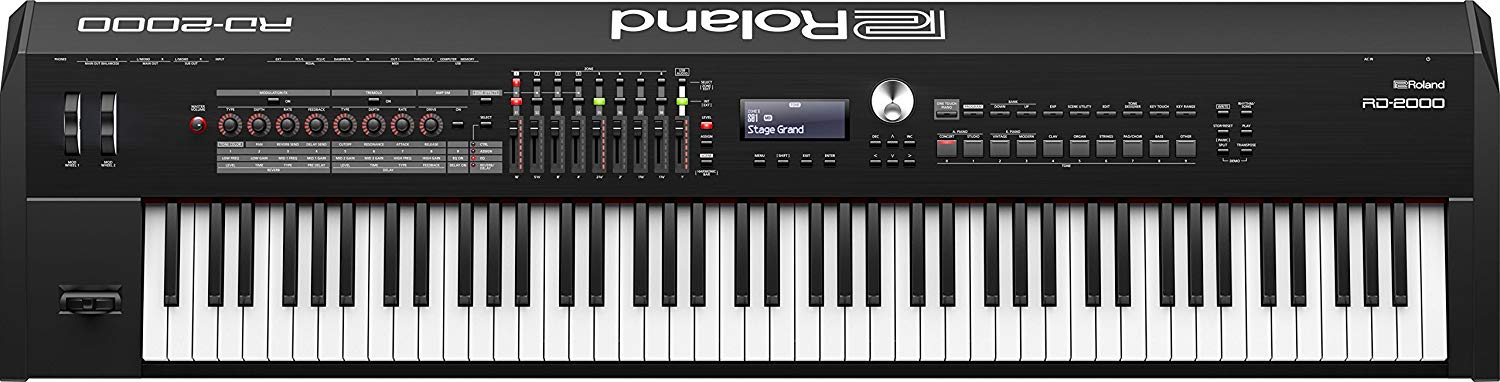
Roland Rd-2000
There are multiple electric and digital pianos in the market, but even with that, we picked Roland RD-2000 as our best digital piano. So, what is unique about this specific piano?
Well, let's start on a high note! Roland RD offers two onboard sound engines! Well, tell me where you have heard of that! The keyboard piano offers a supernatural and v-piano sound engine.
The keyboard can split into eight zones with each making individual sounds. Therefore, you can lay up to eight different tones of your choice the Roland RD 2000 is a perfect choice for creating unique patches.
Whether using it at home or somewhere on a stage, Roland RD will make a great companion. The keyboard is ideal for professional music-making. Therefore, what could be standing in your way of becoming the next big thing?
Pros
Cons
2
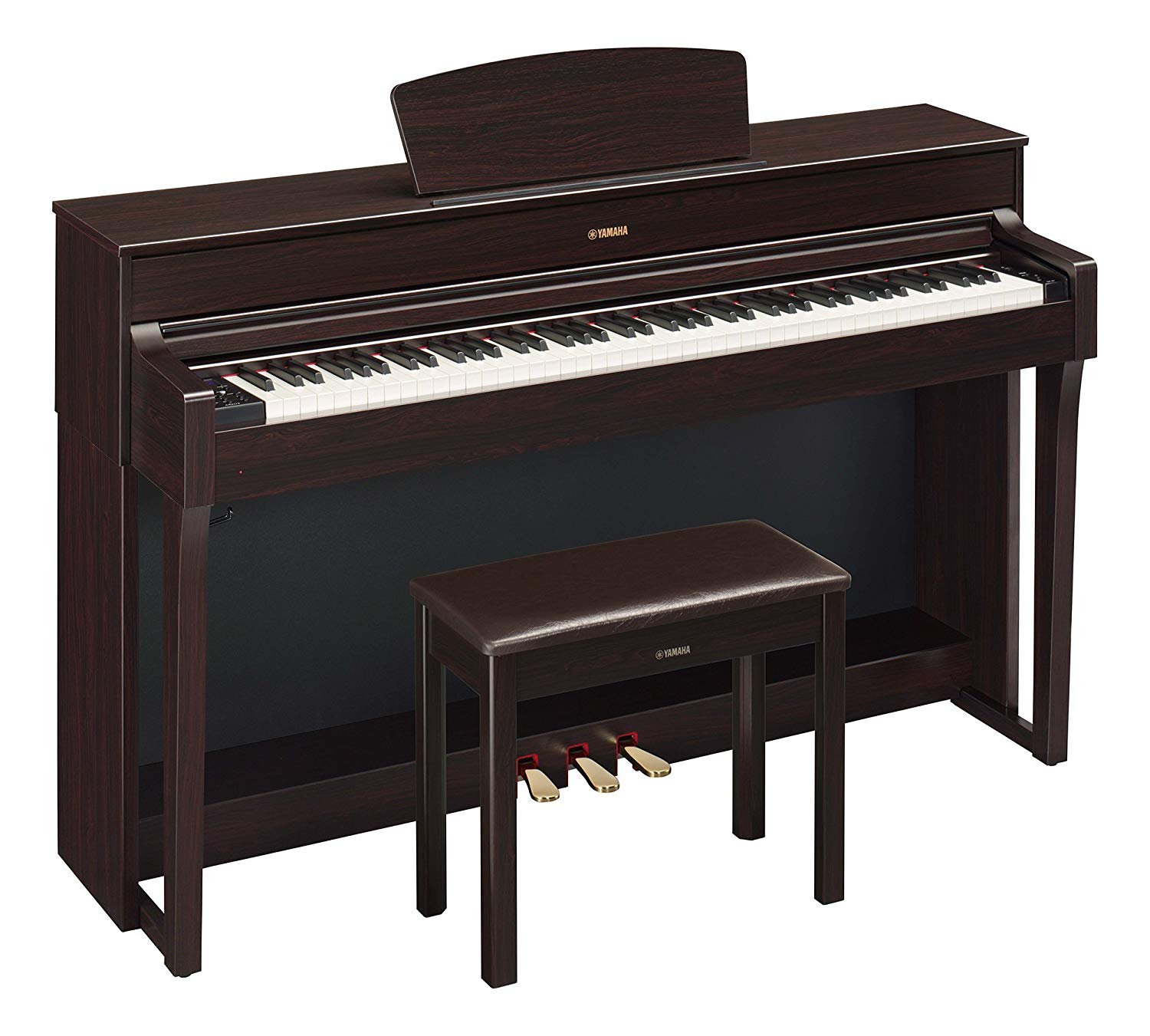
Yamaha Ydp-184
Growing up, we always knew the great music Yamaha keyboards make. Heck! We didn't even know there were other brands out there because Yamaha never made us want to look elsewhere! Well, it does not come as a surprise to many that Yamaha made our list as the second-best digital piano.
The Yamaha YDP is built around the vast and beautiful Yamaha CFX sound. Well, the sound literally gives an out of this world experience.
Yamaha YDP is a piano for a purist looking for the ultimate piano experience. The virtual resonance modeling is an excellent way if enhancing his experience by replacing these strings in the modern piano.
The best thing is you can play the Yamaha YDP with headphones and still experience authentic sound. The stereophonic optimizer recreates the experience of an acoustic piano right in your living room.
Pros
Cons
3
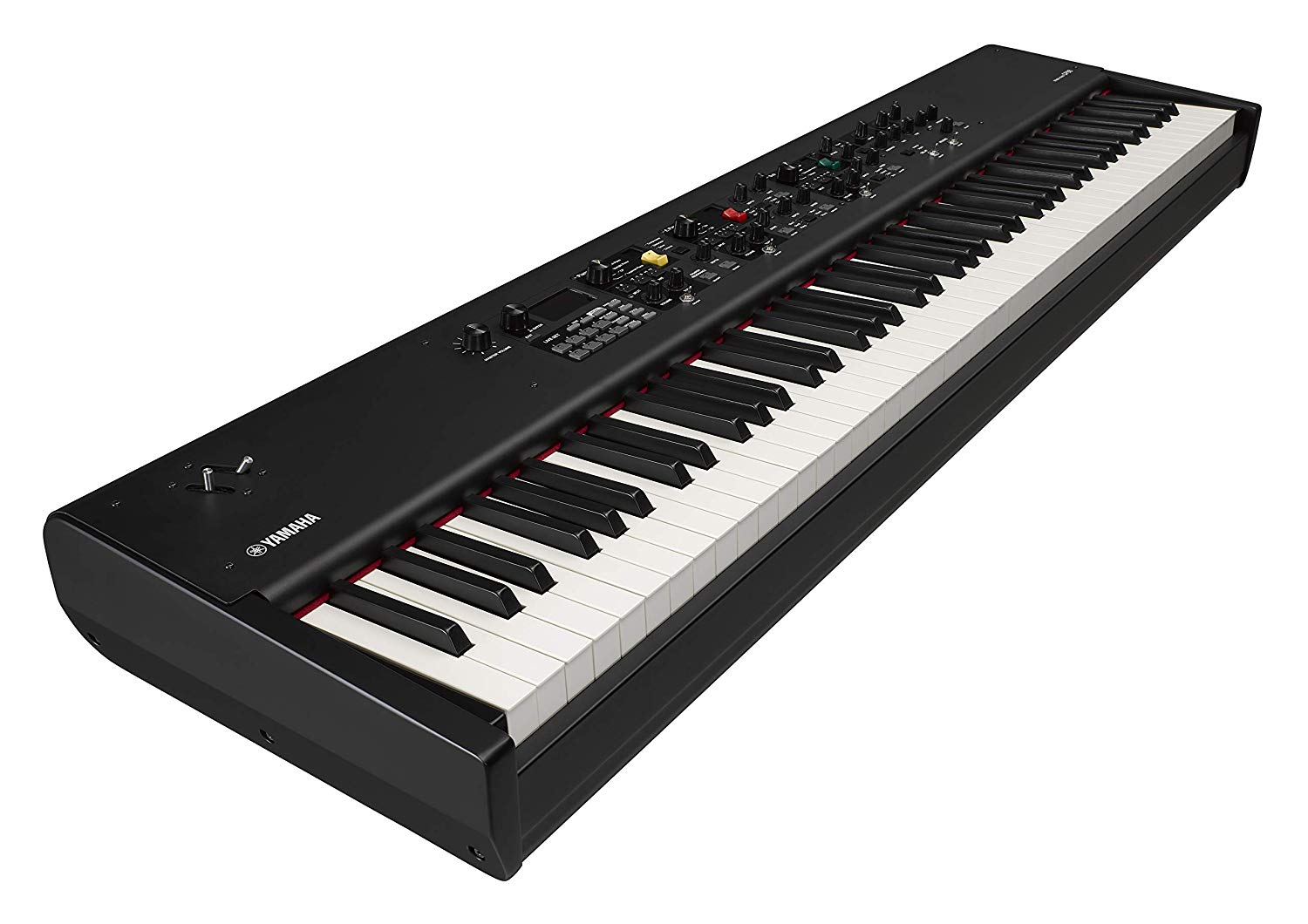
Yamaha Cp88
Yamaha has got something for everyone. Do you know what? Just like all other Yamaha products, the Yamaha cp88 does not fall far behind the others. The quality is top-notch, let alone the features!
So, if you are a performer, producer, or songwriter, then it is time to hit the top of your career with the masterpiece from Yamaha. The Yamaha cp88 is a premium stage piano, thanks to its superior sound. The piano is very lightweight, making it an excellent option for gigs and professional works.
So, what were you looking for again? The Yamaha cp88 is very easy to use despite its compelling nature. The piano exposes you to the experience of an acoustic piano, making it ideal for those looking to experience ultimate piano experience.
There is a wide range of voices available to enhance the experience of the digital piano.
Pros
Cons
4
Kawai Mp11se
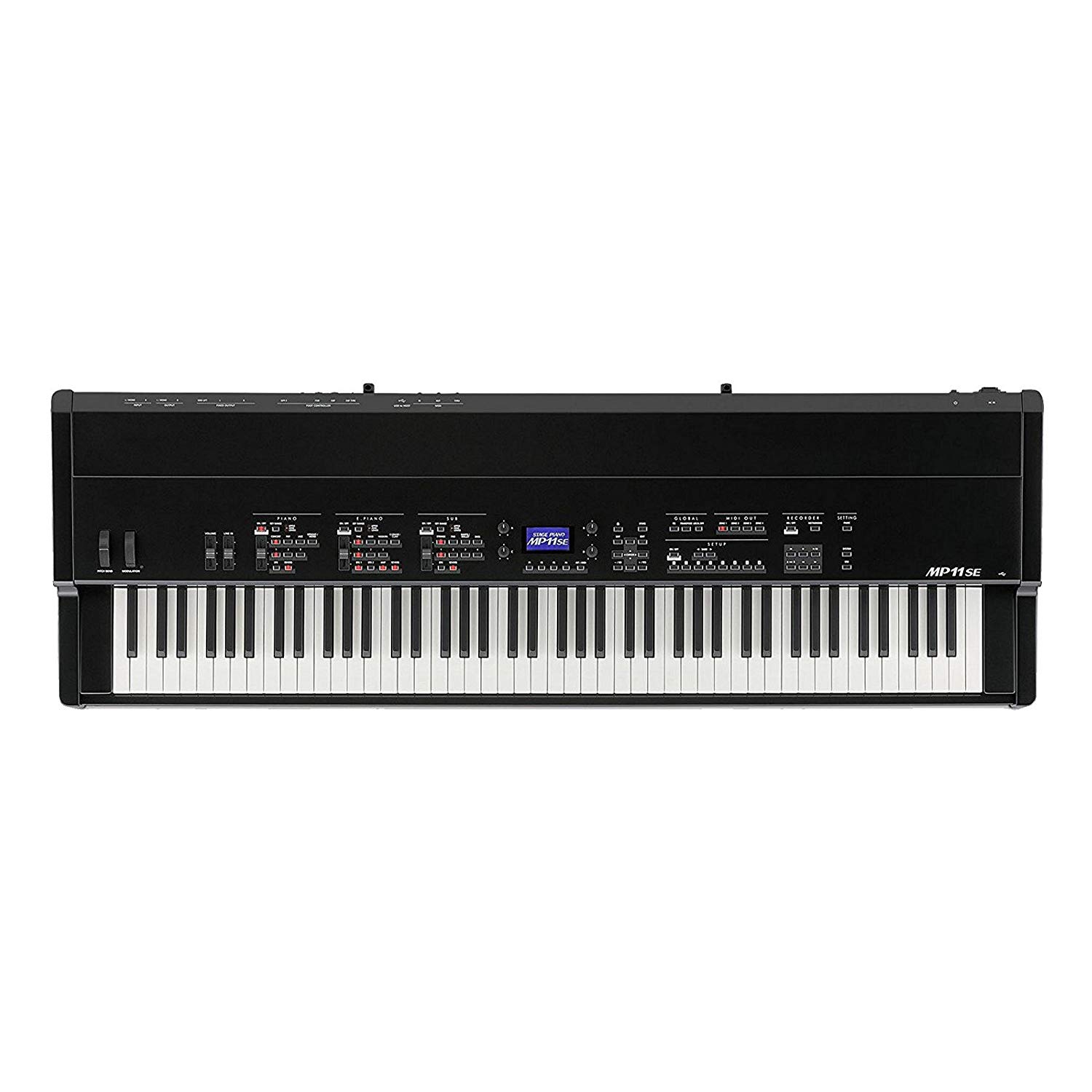
If you are an instrument lover, then there is no doubt you have heard or come across one Kawai instrument. The manufacturer is well-known for expensive pianos and meticulous sampling and recording. Well, then you must be glad to hear that the mp11se does not disappoint either.
Kawai mp11se features grand piano sounds from Kawai ex concert, SK-ex, SK-5, and the Kawai's Shigeru, making the piano a great option if you are looking for ultimate piano experience. The pivot point of the piano has been extended on the hammer keys to resemble that of the Shigeru concert grand piano.
Why should you consider a Kawai mp11se? The piano has one of the most realistic keyboards with an advanced, user-friendly interface. It also offers lovely electric pianos voices, though there is not much of a selection to choose from.
Pros
Cons
5
Casio Cgp-700
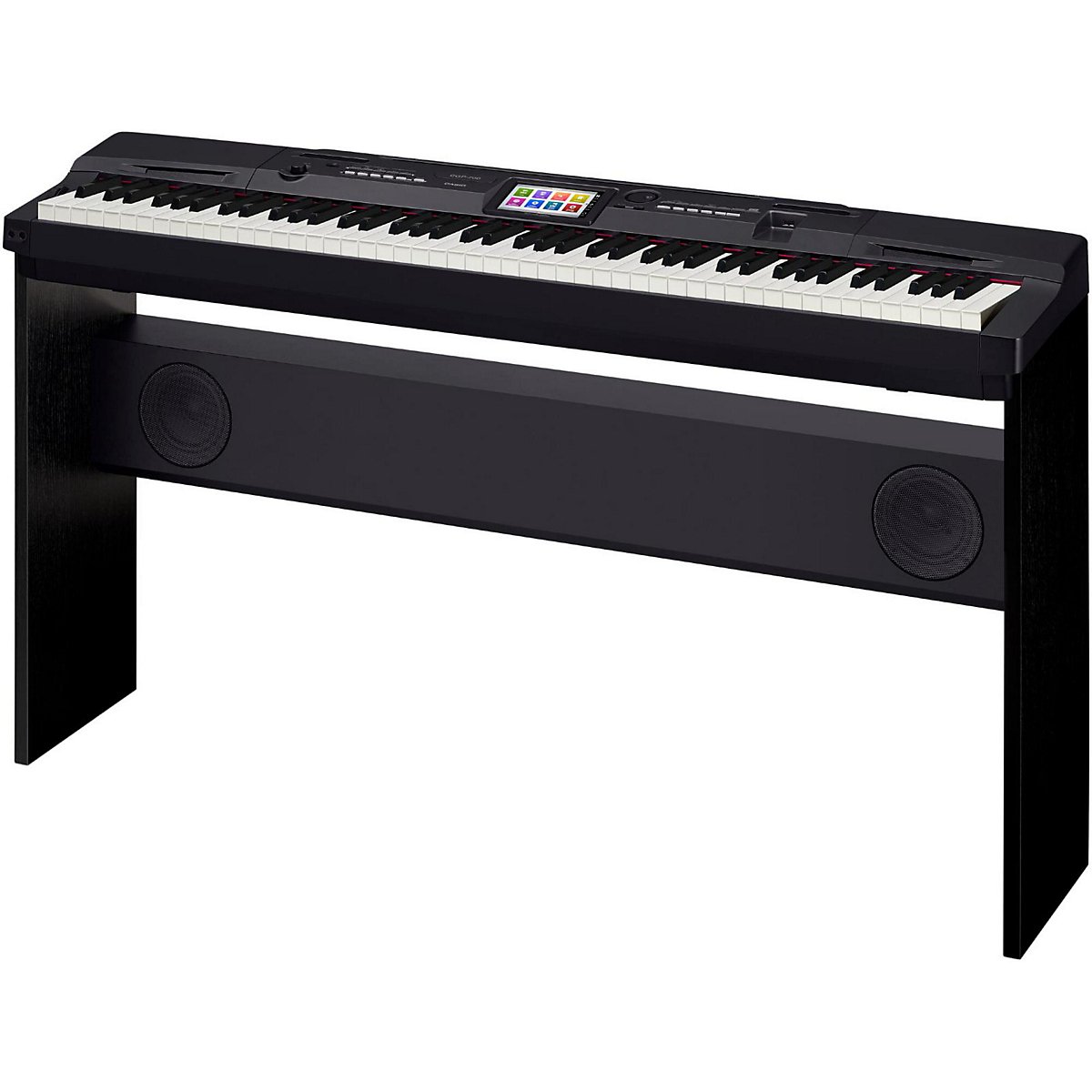
Our final review takes us straight to Casio manufacturers who have had their own share of breakthrough stories. Their pianos are a big deal, and more so because of the price. What are we talking about?
In our research, we realized that Casio CGP-700 offers the qualities it takes to make our list, and to top it up, it is an affordable option.
Casio CGP offers you everything you can be looking for, making it the exceptional value for money. The piano is packed with 550 different voices and 200 rhythms.
What's more, all the 550 voices can be accessed via the 5.3" color touch panel. Yes! You heard that right. The piano is designed with a durable color touch panel.
The touch panel is easy to use and get around.
Pros
Cons
Things to Consider Before Purchasing the Best Digital Piano
Acoustic pianos were the real deal! I mean, who can forget the great music they made? Those lovely evenings by the fire with great acoustic piano music.
However, digital pianos have made significant advancements in recent years due to their affordability and other features that put them above acoustic pianos. If you are torn between an acoustic and digital piano, we will give you reasons to buy a digital piano. Below are some of the advantages of a digital piano over an acoustic piano.
Recording Capability
With an acoustic piano, there was no option of recording. You could play and make your own mistakes, lucky you if you had a tutor or at least a musical ear. Too bad if you didn't have either.
However, with a digital piano, the good news is that you can record you’re playing and listen in at any time. Also, you can teach yourself how to play by recording a reviewing to find out your mistakes.
The recording is also essential for a songwriter. If you are starting out your songwriting career, then you already know the importance of recording and sequencing. A digital piano is a way to go!
Cost
Well. If you have any experience with pianos, then you know that acoustic pianos cost an arm and a leg, literally! However, the good news is digital pianos are more affordable than their acoustic counterparts.
Also, acoustic pianos require tuning firm from time to time, which is rather expensive. However, with a digital piano, you only need to dust it, and you are good to go!
Volume and Versatility
With a traditional piano, the harder you hit it, the louder the sound. However, with a digital keyboard, the sound and size can be controlled over a wide range. What's even better, it's a silent practice that allows you to use headphones, which, if you ask me, is a blessing for the rest of the household if you know what I mean!
Also, digital pianos allow you to add other instruments to the music you are making. They have extensive sound sets built into the system, making it possible to easily add drums and percussions, woodwind instruments such as trumpets, brass, and many other sound instruments to better your performance.
Connectivity
Internet and connectivity have changed the game in every field. Music and pianos are no exception. Connectivity has revolutionized the sector of music.
Digital pianos have midi capability allowing you to connect your keyboard to your devices such as computers and laptops. Connectivity also allows you to connect your phone to recording tools and equipment. Also, most digital pianos have USB ports making it simple to connect to any devices.
What's more, some digital pianos have slots for flash memory cards. They also accept flash discs where you can save the recordings and other necessary stuff, such as own recordings and songs for practice.
Teaching and Learning Tools
The person who designed the digital piano was thoughtful of beginners as most features are suitable for beginners. There are electronic pianos intended for beginners and school learning.
The advantage of these pianos is that they often include built-in learning lessons and exercises to sharpen the skills. They also include chord and notes displays and metronomes. They also enable the learner to go online for more resources.
Some digital pianos have dual headphones jacks for the student and teacher to work silently on practice. Digital keyboards with split-keyboards functions allow teachers and students to play the amen octaves on the same parts of a piece.
Convenience/portability
Pianos come in handy for entertainers, performers, and songwriters. The best thing about digital pianos is they are lighter and usually more compact than acoustic pianos. They are easier to carry around for performance and other events.
They also take up smaller space compared to acoustic pianos. Even console models that come with a cabinet weigh less than an acoustic piano. Therefore, they are the go-to piano if you are likely to get your piano moving more often.
What's more, the digital pianist is designed in a way that they can be broken down into smaller parts for storage. Their acoustic counterparts require much more space to sit as they are inseparable. Well, you can easily break your digital piano down and hit the road for that concert.
As you may already know, there are so many models to choose from when considering a digital piano. So how do you ensure that you hone on the right model?
Your Experience and Skill Level
If you are a beginner, there is no reason absolutely to go for an expensive model. A low-cost model with some inbuilt learning tools may well suffice until you are ready to move to the next level of playing.
However, if you are an intermediate or advanced player, then you may likely want to get a selective digital piano. A digital piano with touch response and velocity sensitivity would be a viable option. You should aim for a digital piano with advanced features though it may come at a higher price.
Dimensions of the Piano
Before you purchase, you must have a place in mind to place it. Make sure the piano will fit in the space you have in mind; otherwise, it will be a complete waste and stress.
Also, if you are looking to purchase a piano for a child, then you must ensure that the height of the keyboard is height-friendly for the child if you can find an adjustable stand, the better because your child will use it through the years.
Let's jump into the magical world of digital pianos and find out everything we can about them, so, how do digital pianos work?
The most excellent difficulty engineers face trying to design the sound and effects in a digital piano as they do not come easy. There is also the problem of reproducing the feel of an acoustic piano. It becomes difficult as there is a lot of physics going on inside these beautiful instruments.
Strings, hammers, and keys are the elements that are used to produce sound in an acoustic piano. However, in a digital piano, we do not have strings and hammers for making sounds. On the contrary, they are used to add weight on the keys and recreate the mechanical movement found in the traditional and acoustic piano.
The moment you press a key in an acoustic piano, the attached hammer strikes the corresponding strings, which then vibrate and make a sound. Since there are no hammers in a digital piano, there are samples which are designed to reproduce sound,
So, what are the samples? A sample is a small audio recording of a musical instrument sound or actually any other sound like ocean waves, sirens, and wind. They can also be excerpts from recorded songs, for instance, a five-second bass guitar riff from a song.
We have a variety of digital pianos since digital pianos are not created equal. You can find different types to suit your needs and your budget. So, let's take a look at each type and define its main features and usage scenarios.
Portable Type
The portable piano is also called the slab piano thanks to its design. They are the most popular design in the market. So, what makes these pianos accessible?
Their design makes them advantageous compared to the rest. They do not come with a base or stand and can, therefore, be moved around with ease. They are also easy to store when they are not in use since they take up the least space.
Unlike portable keyboards, portable digital pianos have a full range of hammer keys like an original traditional piano. Therefore, they are heavier than non-weighted keyboards. However, they are still considerably lighter than their traditional counterparts.
Also, their sound quality is also superior thanks to the higher quality samples and a higher polyphony count as well as a more comprehensive dynamic range.
Well, the price is, of course, the main reason why portable pianos are very popular. They come at a considerably affordable price than the rest of the digital pianos.
Console Type
Today we are reviewing the models in order of popularity, and console digital comes in second. They are so close to an acoustic piano due to their primary elements, such as touch, sound, and look.
So, what is the difference between portable digital pianos and their console counterparts? The console type comes in a furniture design cabinet and some pedals that resemble and feel like those of an acoustic piano.
There are good and bad things that come with the console design. So, what are the advantages?
Unlike the portable type, the console design does not need a stand. You will not need to spend extra dollars to buy a stand or a pedal. Also, the console type will be a great addition to your home, thanks to the acoustic-like elegant design, which will create a statement for your living space.
However, there are several downsides to a digital console piano. The size and weight of the piano can be quite disadvantageous. Why is this?
The console piano weighs from 70-150 lbs, and are meant to stay in a single position rather than moving around. They are easier to move compared to traditional pianos but heavier than digital pianos.
The price range of a console piano is between 700 to 5000 dollars. They are, however, great value for money.
Digital Grand Pianos
If you have enough to invest, then the grand piano is probably a great option. The digital grand piano is the most uncommon and most expensive type of digital pianos.
They are suitable for ultimate music lovers as they offer an uncompromising playing experience, the style and design are mind-blowing not to talk of powerful sound they give off via their state-of-the-art speaker's system. They deliver big.
Many grand pianos are produced by big brands such as Yamaha, Roland, and Kawai, which pretty much explains the price. Their big bodies and make help them to produce a deep, resonant sound that resembles the sound of a traditional grand piano.
The price range of a digital grand piano is quite a big deal. They range between 5000 dollars to a whopping 15000 dollars.
Upright Style
Upright style piano is a sub-type of the console design of digital pianos. They feature fancy and big cabinets that are identical to the console piano.
The most experience type of digital piano excluding the digital hybrids types. The upright design brings with it the design of an acoustic piano as well as a sophisticated hammer action and incredibly detailed samples. That only means better sound systems from the multi-speaker sound system.
Hammer action keys are mainly associated with wooden keys. They give off a sound similar to that of acoustic pianos. However, they are also heavier and bigger than portable digital pianos.
Conclusion
Well, the journey has been quite should we say musical? We have all learned more about pianos than we knew, and that was the goal of the journey, right?
So, as our parting shot, we would love to make your work easier. Besides the best five reviews we did, we would like to help you select the very best of digital pianos. So, how does that sound?
Well, as you may have already guessed, the Roland RD-2000 remains unbeaten. Why did we choose this piano?
The piano offers two onboard sound engines, a feature only found in the Roland RD-2000. The sound gives an ultimate grand piano experience.
The keyboard is also split into eight zones, making it possible to layer up to eight different sounds for great music. The piano is great for home and stage use. The piano is great for professional music-making.
So, what are you waiting for? It's time to get the Roland RD-2000!