Lela Stratton

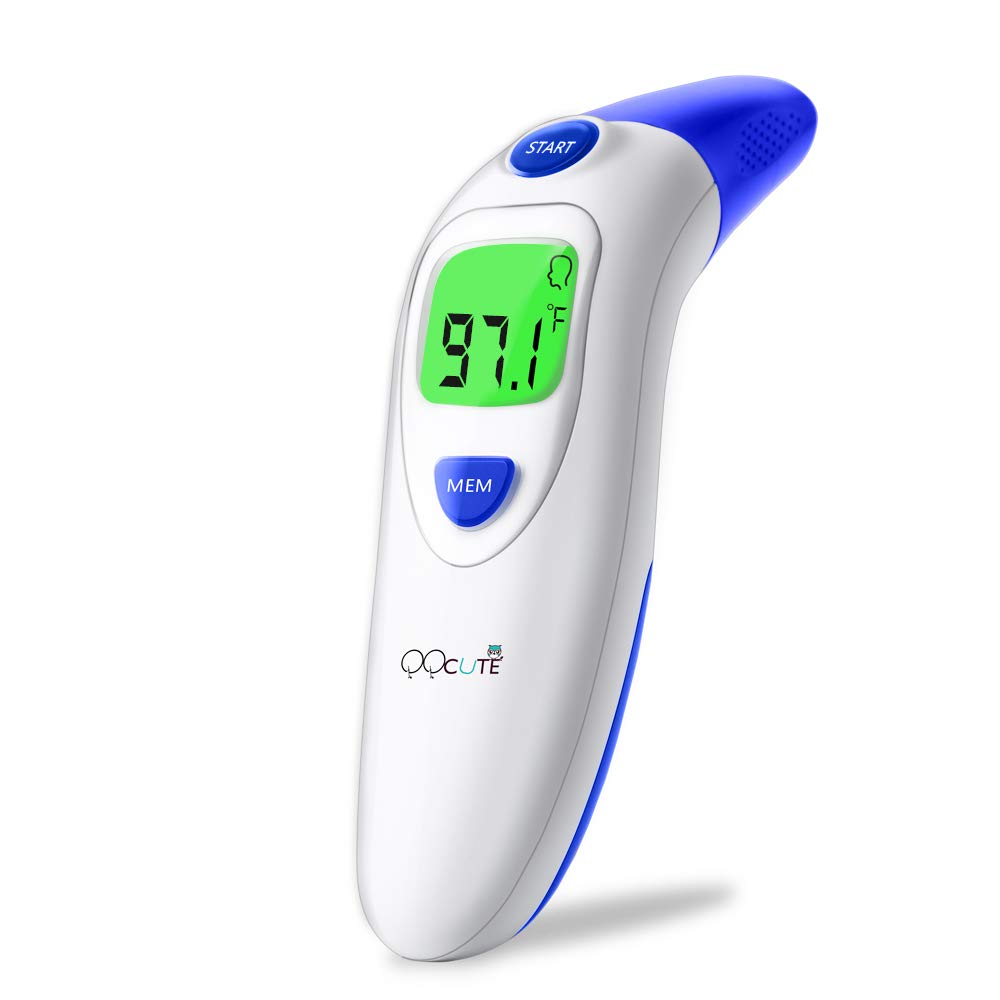
Digital Thermometer


Glass Thermometer


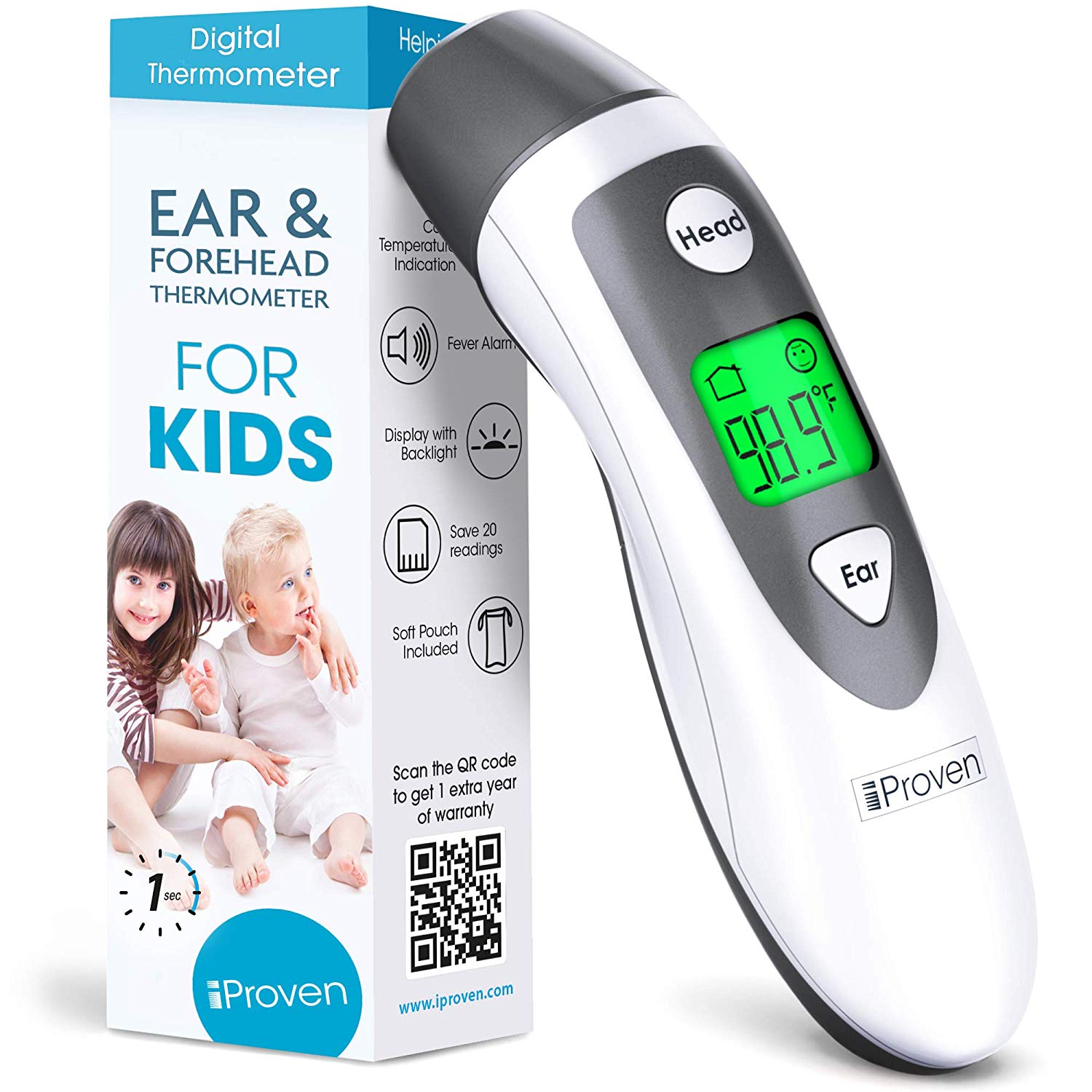
Ear Thermometer
Show Content
Every mother wants their baby healthy and playful. If you see your baby a bit gloomy than usual, then probably the child is sick. As soon as you suspect your child is sick, you would want to have a good baby thermometer with you, just to know the condition of your baby before you rush them to a hospital.
You need a good baby thermometer because when it comes to babies, they are feeble and delicate and need extra attention; so there is absolutely no room for errors. You need all the right information before you make a hasty and possibly wrong decision on your child that will make you regret later.
I’ve specifically written this article, for you- a mother, or father, to help make your decision making on which baby thermometer you’ll pick a lot easier. I’ve picked out five of the best thermometers in the market that you should check out. They all have their advantages and also disadvantages.
When using any kind of thermometer, make sure that you read and follow the instructions that come with the thermometer. Make sure to keenly go through each product so that you buy the right product that you want.
Best Baby Thermometer List
1
Digital Thermometer
A digital thermometer has an electronic sensor on one end and a digital read-out on the other end. A digital thermometer is favorable because it can be used in a number of different ways: rectally, orally, and axillary (under the arm).
If you use your digital thermometer to take rectal temperatures, make sure it has a tip on one end designed to be used for that. Due to sanitary reasons, it is highly recommended that you specifically identify and label your digital thermometer for either oral or rectal temperature checking.
You don’t want your baby’s outside going back inside, so go ahead and label your digital thermometer according to its purpose.
Pros
Cons
2
Glass Thermometer
Most of us know this thermometer from our childhood. It has been scaled and has mercury in it. You place the mercury thermometer under your baby’s tongue and then the mercury rises up the scaling and indicates the baby’s body temperature.
Actual mercury is no longer used because of health issues if come into contact with. If you have one that has actually mercury in it, it is advised you dispose of it properly before you or any other person comes into contact with the mercury.
Just like a digital thermometer, a mercury thermometer can be used to take rectal, oral, or axillary temperatures. Apart from its medical use, it can also be used in domestic, industrial and laboratory fields.
Pros
Cons
3
Ear Thermometer
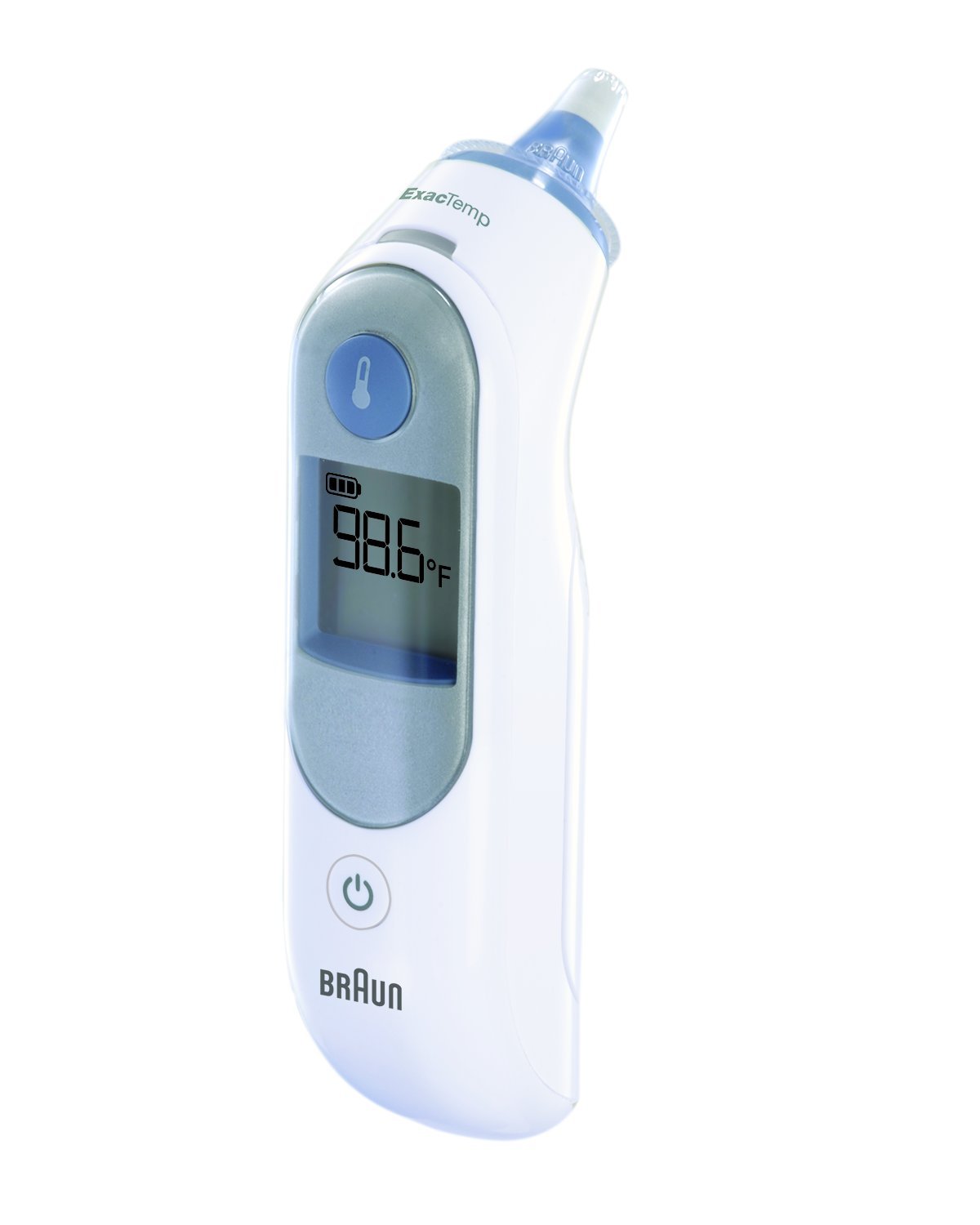
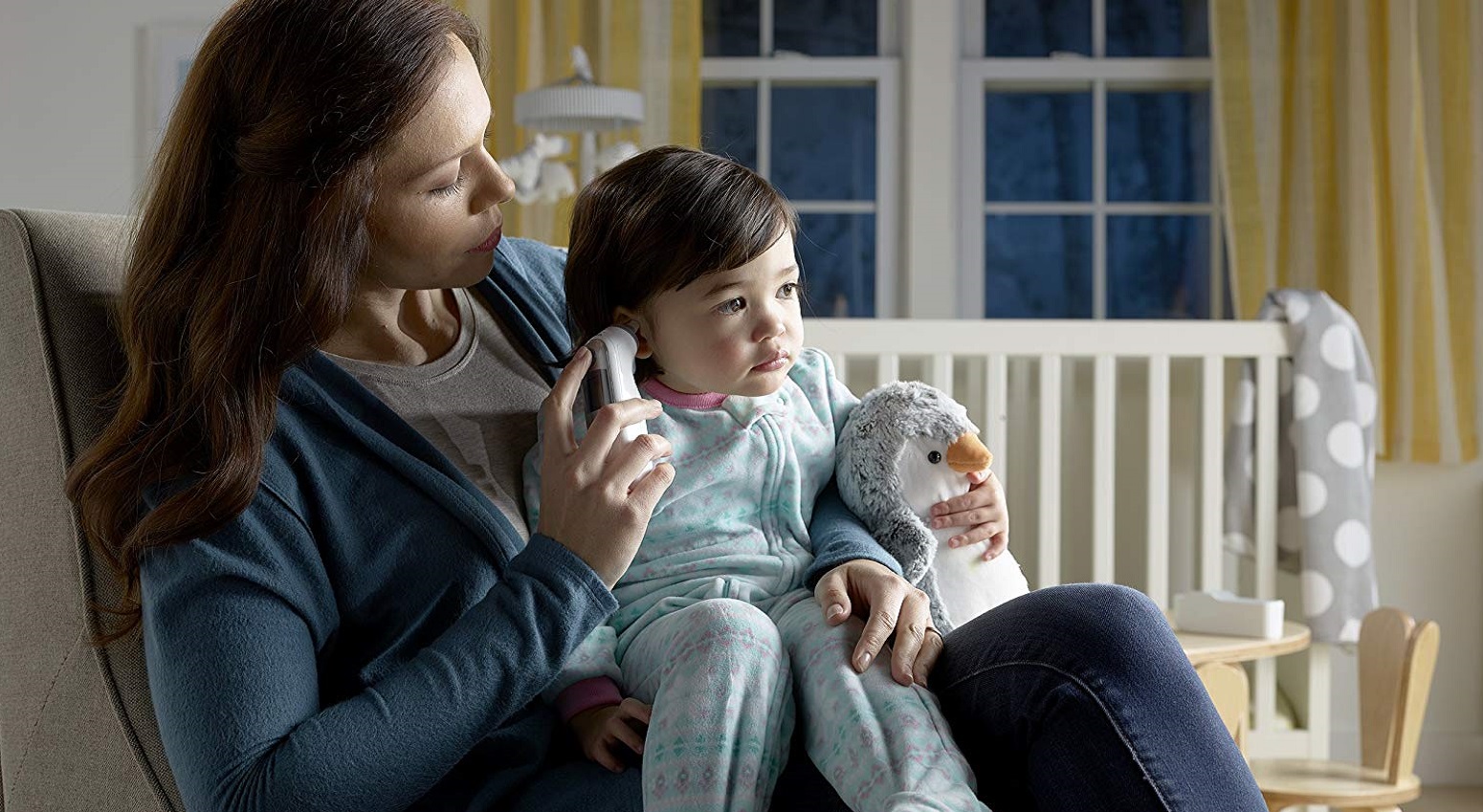
The ear thermometer is a type of thermometer that takes a baby’s temperature quickly by sensing the infrared heat that comes from the baby’s ear. It is a thermometer that records the baby’s body temperature via the ear canal.
The ear temperature closely correlates with the brain temperature, and if properly taken, it is considered the best body temperature reading. It is very fast that it only takes seconds to get the temperature reading of the baby.
An ear thermometer can be used at 3 months to 4 years but you can wait until your baby is at least 6 months of age.
Pros
Cons
4
Temporal Artery Thermometer
Temporal artery thermometer is a type of thermometer that measures the infrared heat that comes off the head of a baby by sensing the temporal artery in the forehead. They are also known as the “forehead thermometer”. Recent research shows that they are accurate for newborns.
For most, you simply swipe the thermometer across your baby’s forehead or gently press the probe against the baby’s temple. New research shows that temporal artery thermometers may also be accurate to kids less than 3 months of age.
Pros
Cons
5
Oral Thermometer

A person should be at least 5 years or older to have a temperature taken in the mouth. Babies can’t hold a thermometer under the tongue so it is not recommended to take your baby’s temperature orally. This includes pacifier thermometers which displays a digital temperature read-out on the front.
If you have ever wondered that baby thermometers are a fake, then this type of thermometers are the ones. Medical professionals widely agree that pacifier thermometers can’t be relied on to detect a baby’s temperature accurately.
Pros
Cons
Things to Consider Before Purchasing the Best Baby Thermometer
If you have been employing the ‘touch test’ for as long as you can remember then nobody is blaming you. But as the parent of a baby, you seriously need to change your ways and get a baby thermometer stacked on your medical cabinet as soon as possible.
Touching the forehead might work for an adult, but it is extremely inefficient in a baby. Primarily because of two reasons. One, it is a long shot trying to discern what is wrong with the baby , since it can’t exactly communicate .
The second reason is that the touch test can be very inaccurate. So you need a baby thermometer that is easy use and one that shows accurate results to help you decide your next move. We can all agree how terrifying having a sick baby can be.
At that point the whole world shrinks and darkness looms in all the corners of your head and you can’t rest till you’re sure that your sweet little baby is fine. Babies also tend to be very fussy when sick, this just piles up all the worrisome thoughts running across your mind.
However, if you are equipped with a baby thermometer, then it all smooths out and you can at least decipher the problem early in advance. But shopping for a baby thermometer isn’t as easy as it sounds since you want to make sure you get the most appropriate one.
Especially since there are different types of thermometers and some aren’t exactly in the front line when it comes to baby suitability. Here are some of the few factors you have to check out I order to get the best thermometer for your baby’s health.
Accuracy
If you want to get the best temperature results, then accuracy I highly important. Thermometers just like any other product can be faulty and a knock off. I don’t even want to imagine a situation where you get the wrong temperature results in your time of dire need.
The thermometer might give you higher results than the actual accurate one. What happens next? You totally go into panic mode and all these scenarios start reeling in your head. It’s much worse if you get lower temperature results.
So since you need to gauge the temperature so as to determine if you baby is coming up with a fever, accuracy should be the number one thing you look for in a thermometer. It is advisable to choose a thermometer that has been certified by the medical profession.
Accurate readings dictate your next move and determine if you will have to rush you baby to a doctor. As you well know when it comes to your baby, you should be prepared to go to the ends of the world to ensure they are healthy and safe.
Consistency
This is a common problem with most low quality thermometers. You can get a specific reading, then a different one after taking the temperature again. Of course this is very stressful and an utter inconvenience.
Hence, you need to buy the perfect thermometer. One that has consistent results streaming no matter how many times you take the baby’s temperature. Inconsistency is a real bummer as it throws you off your trail, resulting in doubts and confusion.
So when analyzing the thermometers you wish to buy, be certain that they provide consistent temperature readings. If you don’t want to take any chances then please go through the various reviews about the specific thermometer, this will immediately alert you if it is faulty.
Speed
Babies are like tiny impatient business people, they don’t have it in them to wait for a process that takes long. They will instantly get annoyed and that’s when the crying starts, an aptitude demonstration for personal space as you might call it.
My point is that buy a thermometer that provides you with the readings within seconds! The new age baby thermometers are relatively fast, but their speed also varies. You certainly don’t want to keep the baby waiting for a minute while you take their temperature.
Fahrenheit or Celsius
Generally thermometers can either have a Fahrenheit or Celsius measurement. This might seem unimportant and a lot of parents have succumbed to the mistake of not paying attention to the specific measurement unit.
Everyone has their desired measurement, this mostly stems from what they were originally taught when they were young. The difference between them is Celsius has a freezing point of 0 degrees Celsius and a boiling point of 100 degrees Celsius.
While Fahrenheit has a freezing point of 32 F and boils at 212 F, in upshot it’s a matter of which measurement you are conversant with. Don’t take this lightly since the fate of your baby’s health lies in your hands and you are expected to understand the readings.
Simplicity
The matter of simplicity comes into question when talking about the thermometers that come with additional features. But honestly it all depends on what you prefer, some of these features aren’t that bad actually.
For instance there are other thermometers that are integrated with a system that allows you to save readings and display the history by the press of a couple of buttons. However, the common consensus is that simple is the best, you don’t want to be caught up in a complex web of buttons.
Sound
You can go for a thermometer that makes a sound after its done taking the temperature, the sound comes in the form of a beep. One the other hand a lot of parents don’t exactly fancy these type of thermometers.
Why? Well imagine if you have to take your baby’s temperature while they are sleeping. The sound can be a total mood killer upon waking your baby. So it’s up to you to determine whether the beep is absolutely necessary or not.
Backlight Display
You can’t predict the exact time you’ll need to take you baby’s temperature. Thus you should buy a thermometer with a backlight display just to be prepared in case you have to take the readings at night and you don’t want to turn on the lights.
Types of Thermometers
As I keep saying, buy the most suitable thermometer for a baby. The good thing is that you have a different options to choose from, so you are not allowed to botch it up.
Glass Thermometer
Glass thermometers are certainly nostalgic, since they were the norm thermometers during our childhood. They are placed under the tongue and initially used mercury. The Liquid metal would rise, displaying the readings.
However, modern glass thermometers no longer use mercury. It was replaced with a non-toxic alcohol because in the event that a glass thermometer breaks, it can release mercury which is highly poisonous, hence alcohol is much safer and cheaper.
Digital Thermometer
This thermometer is capable of taking under the arm, oral and rectal temperature readings. The reading is then displayed in an LCD readout. It is not the best choice for a baby due to a few disgruntling issues.
For one, it’s not designed to be used as a rectal thermometer for babies, since it is long and can result in injuries. The other downside to this thermometer is that it is very hard to take an oral temperature on a baby.
Ear Thermometer
They use infrared rays to measure the temperature inside the baby’s ear canal. This makes them extremely simple and easy to use. To take accurate results with an ear thermometer, you need to pay attention to some minor details.
You have to make sure that the ear is clear of any wax build up, as failure to keep the ear clean is likely to result in lower readings. To guarantee efficacy, it must fit well so it is recommend to get one that is sized for the child’s ear canal.
Temporary Artery Thermometer
This thermometer uses infrared technology to measure the temperature of the temporal artery in the forehead. It is easy to use, all you need to do place the thermometer on your child’s forehead and you get the readings.
Pacifier Thermometer
Yes, pacifier thermometers exist! They have a sensor at the tip of the pacifier to pick up on the temperature which is then displayed on a LCD at the front of the pacifier. Everything about pacifier thermometers scream inaccuracy and they are!
Rectal Thermometer
Rectal thermometers that are designed solely for this purpose offer the best results when it comes to a child’s temperature. They come highly recommended by medical professionals due to their high accuracy levels. Although they can be a bit uncomfortable, they get the job done!
Frequently Asked Questions of the Best Baby Thermometer
Can I Use Digital Thermometer for Rectal Readings?
No you can’t. Primarily because they are hard and have a long tip. This can be perilous and end up damaging your baby’s rectum. So you should at all times use thermometers that are soft and not sharp at the end to take rectal readings.
Should Ear and Forehead Readings Be the Same?
The most forward way to put this is that there are other factors that may influence the accuracy levels of the readings in the ear and forehead temperatures. So they can absolutely be different, but the discrepancies are not large.
So don’t be scared if you get different temperature readings on the ear and forehead having used the same thermometer. Forehead temperatures are usually more accurate than ear readings and forehead thermometers are very easy to use. Rectal readings are the most accurate.
Conclusion
Of all these baby thermometers-even though all are good, I highly recommend that you go for the digital thermometer. This type of thermometer allows for you to use it in many different ways: either rectally, orally or axillary (under the arm). It has a digital read out where you can easily read out the temperature. It is used to check the temperature of children below
This bad boy is quick and convenient to give results of the temperature reading. They provide temperature readings in decimal points for an accurate reading and also they do not require any special maintenance. It is every mother’s joy to see their child healthy.
Having a sick baby is never that relaxing. But, being able to monitor you kids temperature can give you some peace of mind. What are you waiting for, go grab yourself the digital thermometer now at a very fair price. Make the health of your baby a priority by buying this multi-tasking thermometer.
Why use a way cheaper baby thermometer that will not give you accurate details when you can get this one and not have any doubts or regrets of the functionality. Get one at the nearest shop to you.