Lela Stratton

Bsa Rd30


Nikon Bolt Xr

Hawke Hk3259
Show Content
Crossbow scopes are accessories that are vital when it comes to hunting or archery. Although the crossbow is the main tool used for hunting and archery, scopes come in handy and help a great deal in these two activities when used together with the crossbow.
Scopes are important because they not only improve your accuracy when shooting at all ranges but also, they improve your arrow placement. These improvements are what eliminate guesswork in elevation of the crossbow and the range of shooting.
Scopes are also useful for magnification of your target. What this simply means is that scopes bring your target closer to you. They make the visualization of the target easy hence, enabling you get a perfect shot.
Since scopes are so vital when it comes to hunting there are many types of scopes flooding the market. It can be difficult to choose what scope is best for you as they all feature many unique designs and features.
However, there is no need to worry anymore. We will go through the best crossbow scopes that you can choose from. These scopes will serve your specific needs and make hunting not only fun but also effective. Let us begin.
Best Crossbow Scope List
1
Bsa Rd30
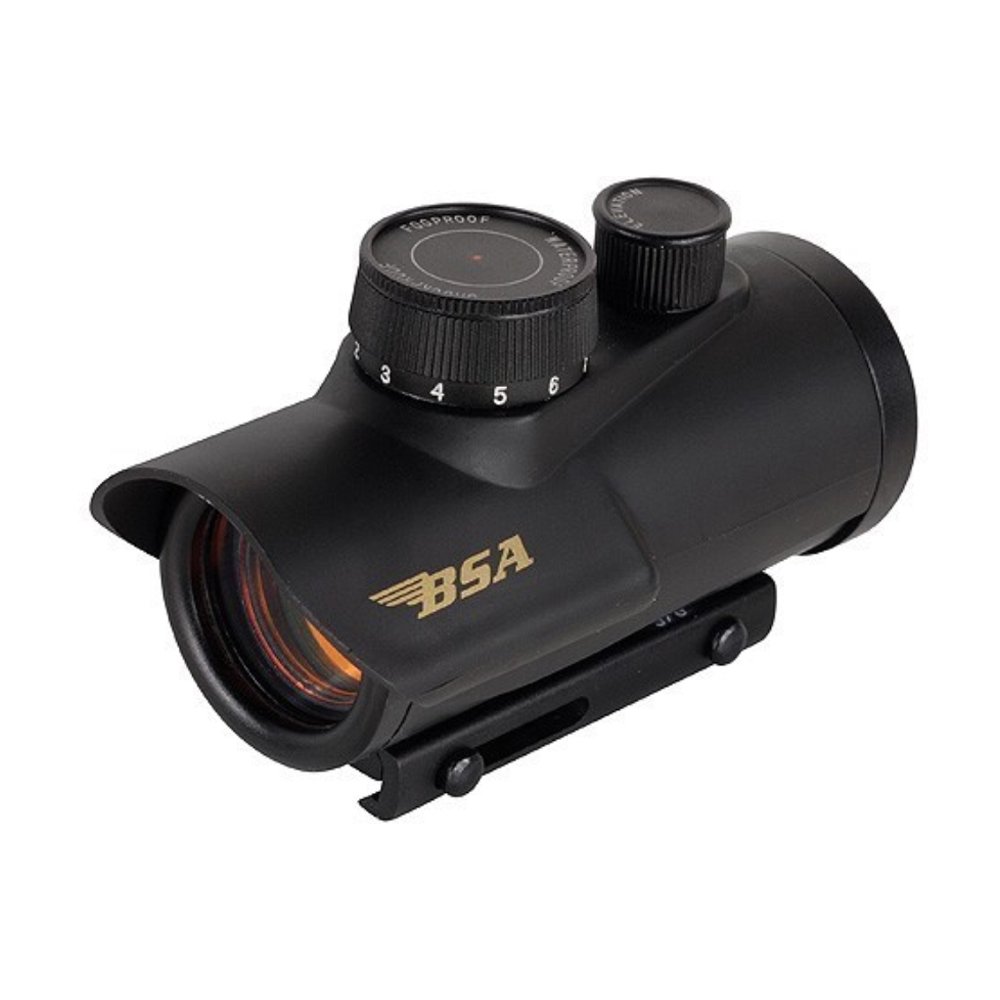
The first scope we will look at is the BSA RD30. This is a good option for you if you are looking for a crossbow scope that is small in size. The small size of this crossbow scope means that it does not add anything to its girth.
The BSA RD30 features a 5 MOA red dot as well as an eleven-position rheostat. You can control the scopes brightness using its brightness controls. This scope is also equipped with a battery that runs all the high tech found in the scope.
An excellent feature of the BSA RD30’s battery is that it is long-lasting and easily replaceable. This scope also contains only the functions that you need to use.
Pros
Cons
2
Nikon Bolt Xr
The Nikon Bolt XR is an option you should consider if you are looking for a crossbow scope that has a mid-high price range and you do not mind having a scope without illumination. Shall we then look at the features present in this crossbow scope?
The first feature we will look into are the large fully multicoated lens. The idea behind the design of this lens is to make them not only fog proof but also, waterproof and shockproof. This makes the Nikon Bolt XR quite hardy.
Another feature of this scope is zero-Reset turrets. Zero-Reset turrets allows you, at a distance of 20 yards, to sight-in, lift the spring-loaded adjustment knob, rotate the knob back to zero then re-engage.
Pros
Cons
3
Hawke Hk3259
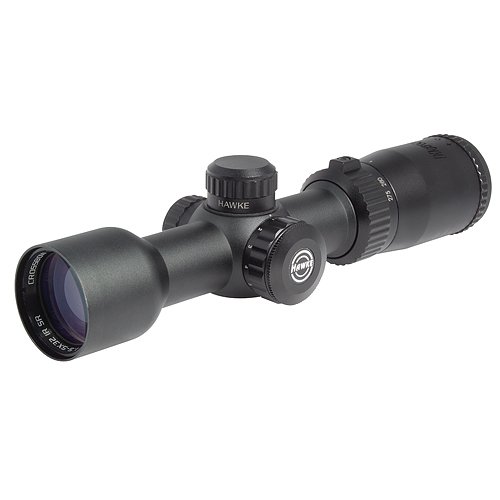
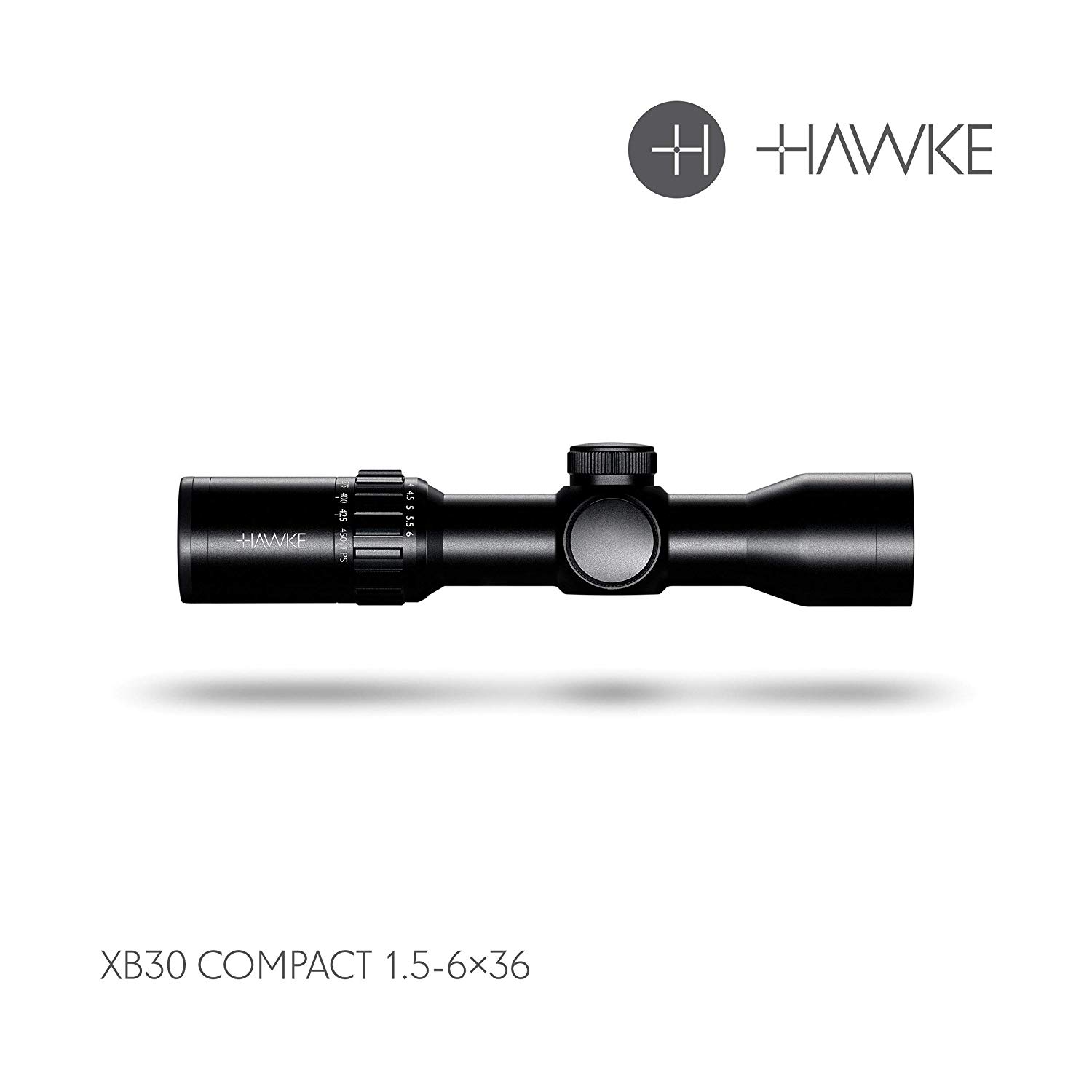
If you are a looking for a crossbow scope that is highly advanced and at the same time easy to use, then this is an excellent choice for you. The features of the Hawke HK3259 are what make this crossbow scope advanced.
This crossbow scope is designed for compounds which gives it an edge compared to highbred model scopes. What’s more is that the sizing of the Hawke HK3259 is tailor-made making it an excellent pick for models who are choosey about their add-ons.
The Hawke HK3259 has high quality optics thanks to its one-inch multicoated lens. In addition to this, this scope has green red illuminated colors that assist you in keeping your target always in your sight.
Pros
Cons
4
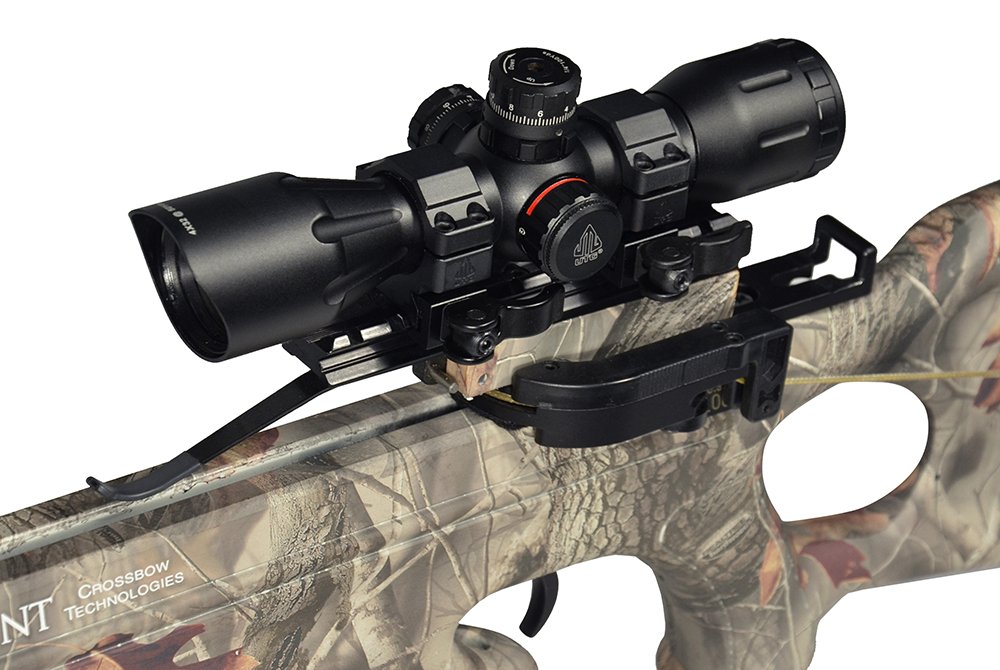
Utg Scp-m4cr5wq
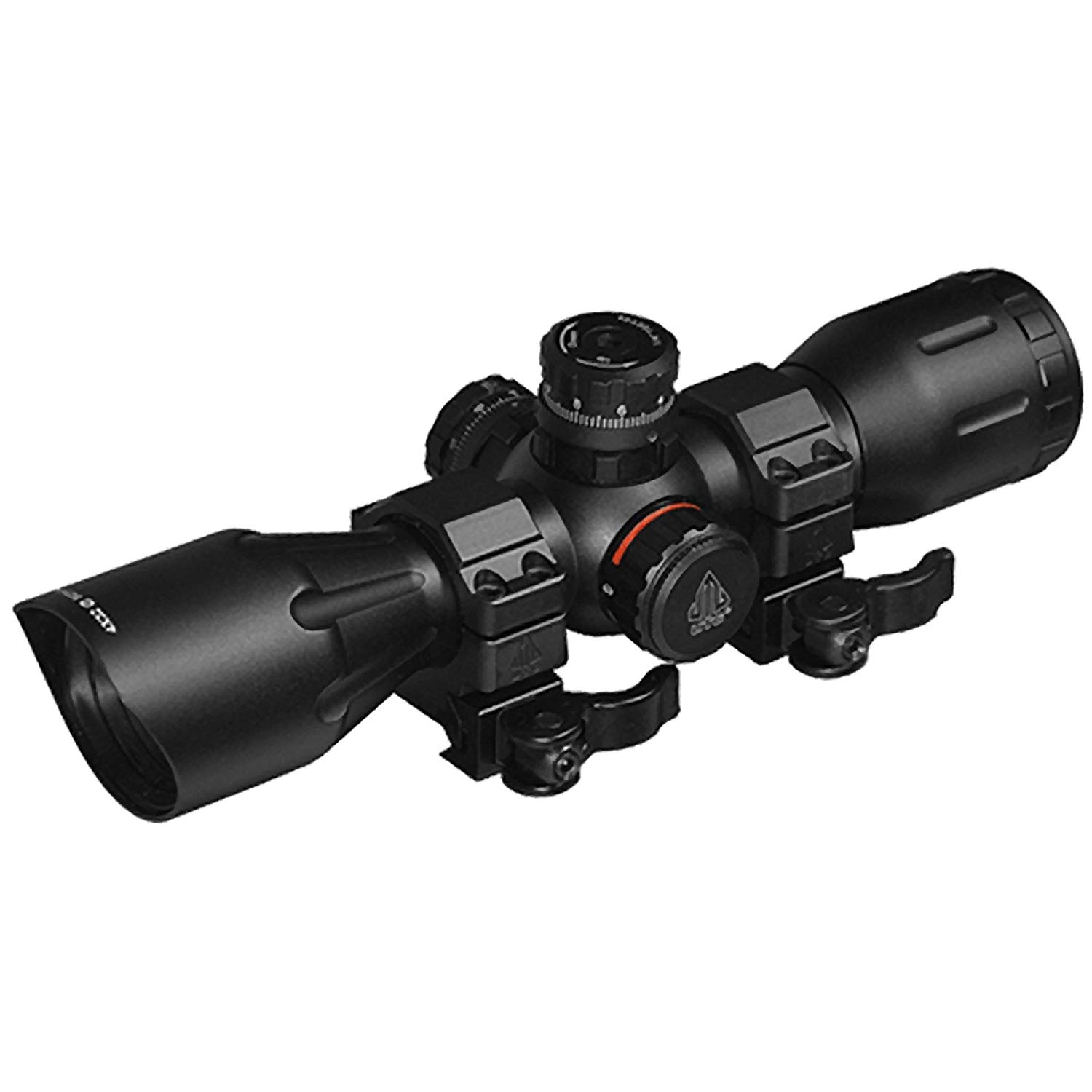
The UTG SCP-M4CR5WQ is a good choice for you to consider if you are a beginner as it has beginner-friendly features. This crossbow scope is also good looking a feature that gives it quite a bit of an advantage over the other crossbow scopes.
Away from the looks of the UTG scope, this crossbow scope can be used with or without guns. The UTG SCP-M4CR5WQ model in particular is capable of use with or without a gun without it losing any of its features.
Let us look at other features that ensure this scope is of high quality. The UTG scope features a flip-open lens cap. It has zero-reset and elevation knobs as well as a five-step reticle and an RGB sidewheel illumination.
Pros
Cons
5
Barnett 17060

Our final crossbow scope is an excellent choice for you if you are a perfectionist. You want to know why? Well, first is the great clarity offered by the Barnett 17060. This crossbow scope features a 4x magnification. That’s right! 4x magnification!
The 4x magnification gives this scope a bit of superiority over other scope since very few crossbow scopes are capable of matching the richness of color and light handling provided by the Barnett 17060 at its lowest magnification. Can you imagine that?
Apart from its powerful magnification, this scope is compatible with bows of all kinds. This feature makes it a good choice for hunters deciding whether or not they need to begin scooping their hunts.
Pros
Cons
Things to Consider Before Purchasing the Best Crossbow Scope
We have gotten you a bit of clarity on what crossbow scopes that the top pick in the market. However, that is not all there is to know when it comes to crossbow scopes. Knowing what scope to buy is just the beginning of your journey into getting the very best crossbow scopes.
You are probably wondering what else there is to know about crossbow scopes. Well, stick around a little longer as we discover what else is vital for you to know before you purchase a crossbow scope.
We will begin by looking at a few technical terms that you need to be familiar with when buying crossbow scopes.
Eye Relief and Exit Pupil
Eye relief is the distance between your eye and the lens. When it comes to eye relief it is important that you ensure that distance is not too short. If your eye relief is short you run the risk of getting an eye injury.
An eye injury is likely to occur when the scope is pulled back by the recoil. It is important you note that there exists an inverse relationship between the eye relief and the magnification of the scope.
Let us now shift our focus to exit pupil. Exit pupil is a term that refers to the amount of light that travels up your scope and into your eye. A good level of light ensures that your visibility is good.
Field of View and Reticle
The width of the image while you are looking down your scope is what is referred to as the field of view. The field of view depends on two features, the magnification of the scope and how its lenses are configured.
If you are wondering how magnification and field of view are related the explanation is quite clear. The field of view is lesser in the presence of more magnification. In other terms, the higher the magnification of your scope, the narrow the field of view. It all makes sense, right?
Now that you know what the field of view is, let us now learn what a reticle is. An arrow follows a parabolic trajectory when travelling from your crossbow to the ground. The role of the reticle is to assist you, at specific distances, in pinpointing the trajectory of the projectile.
Interesting right!
Length and Stray Light
So, what is length? Length is the measurement between the objective lens leading edge and the back edge of the eye piece. The longer your scope is the higher the magnification. A long scope however, comes with one disadvantage.
It tends to be heavy therefore, giving your crossbow a bulky profile. A heavy crossbow is also quite tasking to maneuver it. Now that we have shed light on what the length of a crossbow scope is all about, let us look at stray light.
Stray light occurs when light reflects off the metal of your scope. The glare that results from this reflection goes through the scope and distracts you when taking your shot. How do prevent stray light from disrupting your shooting?
When choosing a scope ensure that the scope you pick has an inner coating applied. The inner coating is vital as it stops the glare hence, makes it easier for you to clearly see your target with no disruptions.
Magnification
We have mentioned magnification severally but have not really looked at it in-depth. Magnification is one of the key features that you inquire about when purchasing a scope. In a scope model specification, magnification is the first number that you come across.
What then is magnification? Magnification is the number that tells you how many times an object appears closer to you than it actually is. You can compare it to zooming. Now that you know what magnification refers to let us look at another term.
Objective lens diameter. This is the second number found in a model’s classification. Remember the first number indicated on a model’s classification is magnification. You now get why we are going through magnification and objective lens diameter at the same time right?
The objective lens diameter indicates the lens’ exit pupil or the amount of light that reaches the eye you are using for shooting. To illustrate how magnification and diameter relate to each other here is an example.
If the model classification of your crossbow scope is 4 x 32, the first number, in this case 4, represents the magnification while the second number, 32, is the diameter of the objective lens.
Durability and Warranty
A scope that is well-built will last for many years and can as well be transferred from one crossbow to another. A key feature that influences the durability of a scope is how weatherproof it is.
Your crossbow is bound to come into contact with harsh weather elements. To protect your scope from wearing out quickly, ensure you get a crossbar capable of withstanding heat, dust and moisture.
Your scope should also have lenses that are fog-proof to ensure optimal clarity. Warranty for a scope on the other hand is offered either between five years or lifetime depending on the manufacturer.
It is important to have a warranty for your scope. Make an effort to check the manufacturer’s customer support quality reviews when it comes to learning more about the warranty of the scope you want to purchase.
Having a lifetime warranty is of little to no use if the manufacturer fails to respond to your inquires or if they send you goods that are faulty after their delayed response and the long wait for a replacement scope.
Purchasing your scope from a reliable third-party can be useful in assisting you get a legit warranty as they reasonably cover you when it comes to returns and other issues with the manufacturer.
Illumination and Accessories
The purpose of illumination is simple. A scope that is illuminated absorbs light from the surroundings in order to brighten the image that you see when looking down your scope. This is a vital feature you should not overlook.
Illumination comes in handy when you are hunting in low-light conditions. Ensure you get yourself a scope that is illuminated. Shall we now look at accessories? There a re a few things that come with a good scope.
These accessories are additional features present in a good scope. Some of these accessories are a lens cloth, scope caps and some form of equipment that allow you attach the scope to the crossbow. An example of such attachments are scope rings.
Types of Scopes
We have learnt what the terms associated with crossbow scopes mean. Now let us know the type of scopes that there are. We will start with magnified scope. The image of your target is amplified by a magnified scope.
It is important that we clear out the air on a popular belief that magnified scopes improve your aim. They do not. However, what magnified scopes do is help you with identification of an arrow path through areas with overgrown vegetation.
Scope magnification is available in two types. Fixed-power scopes and variable scopes. Fixed-power scopes vary from 3x to 6x magnification in crossbows. On the other hand, variable scopes are able to adjust through these ranges.
It is not recommended to keep changing scope magnification during a hunting a hunting session. This is because you will constantly have to zero-in which means adjusting the scope to the specific magnification of that given time of hunting.
Constant adjustment of the magnification takes a bit of time, time that you may not have when hunting as you may miss your target while trying to get the right magnification. We have learnt quite a handful about magnified scopes let us look at ballistically calibrated scope.
Ballistically Calibrated Scope
This type of scope features reticle designs. These designs are what show you the flight path of the arrow. The target of the arrow for each distance is shown by a red pin. If you own a scope that is a bullet drop compensator, you cannot adjust the reticles.
The thought of lacking the ability to adjust the reticles should not worry you to much. All you need to do in this situation is practice and memorize the crosshairs locations. This is because the location of the crosshairs relates to the different ranges.
We now know how ballistically calibrated scopes work. Let us shift our focus to red dot scopes. Red dot scopes are simpler compared to other types of scopes. The reason why red dot scopes are simpler is because they do not feature calibrated reticles or magnification.
Instead what these scopes feature is a red dot that shows you where the arrow will hit.
Intended Use of the Crossbow
What you intend to use your crossbow for is an important factor that influences the type of crossbow scope you get. There are different ranges scopes that vary depending on the activities you use your crossbow for.
A scope designed for target shooting will differ in functionality compared to one designed for use in hunting. There are also scopes that are designed specifically for use in shooting competitions.
If you often hunt target in motion a laser sight is an alternative type of scope you should consider buying. The laser assists you to predict the location the arrow will likely strike the selected target.
You can attach a laser sight to the underside of your crossbow or the upper portion of the scope. Laser sight is good for determining targets located at midranges with excellent accuracy. The intended use of your crossbow goes hand-in-hand with the range of your targets.
Scores typically fall under three ranges. These ranges are up to twenty yards, twenty to sixty yards and ranges further than sixty yards.
Scope Mounts
At the end of the day the scope you choose will be mounted to your crossbow’s structure. You have a few options when it comes to selecting what mount is suitable for your scope. Your options are dovetail, weaver rails and picatinny.
It is important you consider what contribution the scope makes when it comes to accuracy, range and size especially if you are an archer. Look for scopes that increase range. These will give you an easier time when it comes to striking your intended target.
If you intend to use your scope for the purposes of hunting you will need to get a scope whose distance is between short to mid-range. This is especially necessarily if you are hunting small game.
There are other features that need to be present in hunting scopes. The scope should tightly fit onto the scope mount and it should be lightweight. The scope should also be durable. A very heavy scope is not ideal for hunting.
This is because a heavy scope is likely to hinder your ability to hunt. A picatinny rail elevates the scope about half an inch above the body of the crossbow. A picatinny rail is ideal for use with a red dot scope.
Dovetail rail is quite similar to picatinny rail in terms of its appearance. Dovetail rail features a set of grooves that run parallel and eventually end up joining in the scope’s middle section.
Weaver rails are the steadiest rails and they clamp on the beveled outer edge of a scope.
Conclusion
Our time together is coming to an end. Allow me however, to leave you with the best crossbow scope you definitely need to get yourself. This is non other than the BSA RD30. This crossbow scope is a must have for everyone.
First and foremost, the BSA RD30 is affordable. Who doesn’t love a quality product that is cheap? Another feature that makes this scope the best is that is only contains functions that you need to use. It does not feature any unnecessary functions.
The BSA RD30 has a battery that is not only long-lasting but also easily replaceable. Have I mentioned that this scope rarely goes out of alignment? In addition to all this, it is easy to mount the scope for users at all levels.
Go on now and get yourself the BSA RD30 and get to experience a change in your hunting or archery lessons.